The Federal Government has announced the permanent suspension of deductions made for revenue collection costs previously paid to agencies such as the Federal Inland Revenue Service (FIRS), the Nigerian Customs Service (NCS), and the Nigerian Upstream Petroleum Regulatory Commission (NUPRC).
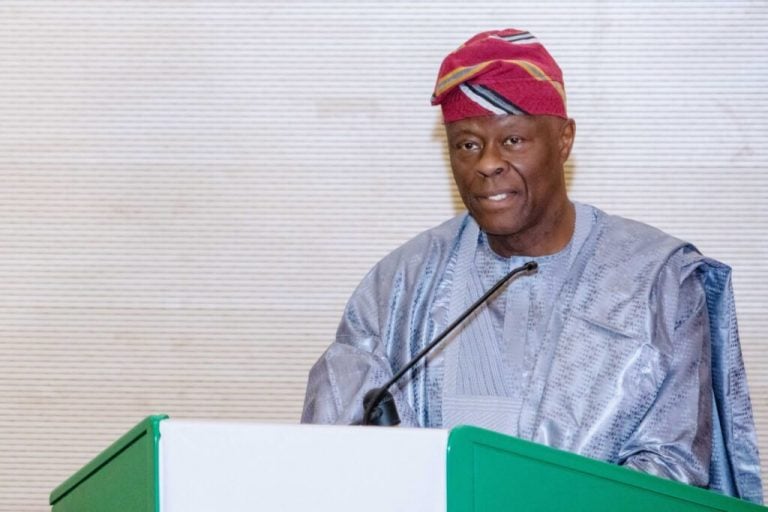
Minister of Finance and Coordinating Minister of the Economy, Wale Edun, disclosed this in Abuja on Wednesday during a panel session following the launch of the World Bank’s Nigeria Development Update (NDU) for October 2025, titled “From Policy to People: Bringing the Reform Gains Home.”
According to Edun, President Bola Tinubu has directed the removal of several layers of deductions that were previously made before funds were shared from the Federation Account Allocation Committee (FAAC). The move, he said, aims to improve fiscal transparency and ensure more funds reach the federal, state, and local governments.
“President Tinubu has mandated a thorough review of all deductions, including those made for the cost of collection. Previously, before distribution, multiple deductions were made from the gross revenue. I can confirm that most of those deductions have now been eliminated permanently,” Edun stated.
He explained that the reform aligns with the administration’s broader fiscal agenda to strengthen governance, enhance transparency, and guarantee predictable revenue flows for all tiers of government to finance development projects.
Edun added that the government is currently reviewing all forms of deductions from gross revenues — including refunds and interventions — to ensure that every naira collected contributes meaningfully to national development.
“The constitution requires that revenues from collecting agencies flow directly into the Federation Account for distribution according to the approved formula. This is now being fully implemented. We expect greater transparency, stronger accountability, and better funding for development projects across the federal, state, and local levels,” he said.
Historically, agencies such as the FIRS and Customs have retained a percentage of collected revenues as a “cost of collection.” Critics have argued that this practice promotes inefficiency and reduces the amount available for distribution through FAAC.
At the same event, the World Bank’s Lead Economist for Nigeria, Samer Matta, observed that although Nigeria’s gross revenue collection has risen sharply in 2025, significant portions are still lost to various deductions that do not directly enhance development outcomes.
Matta revealed that FAAC allocations have increased from around 5% of GDP in 2023 to nearly 9.5% in the first eight months of 2025, driven by stronger oil receipts and improved non-oil tax performance. However, he warned that much of the increase is offset by deductions for agency spending, refunds, and interventions — which undermine fiscal efficiency.
“Nigeria’s revenues have grown, but so have deductions,” Matta noted. “What’s needed now is ensuring that these funds deliver measurable development outcomes rather than being consumed by administrative costs.”
The NDU report also highlighted a spending imbalance between the federal and state governments. While state and local governments have ramped up capital expenditure — projected to reach 2.7% of GDP in 2025 — the federal government continues to spend most of its budget on debt servicing, salaries, and overheads, leaving little fiscal room for infrastructure projects.
Despite these challenges, the World Bank commended Nigeria’s recent fiscal and monetary reforms for boosting revenue mobilization and cutting the fiscal deficit from an average of 4.4% of GDP (2021–2023) to about 2.5% in 2025, describing it as a sign of “fiscal resilience.”
However, the Bank cautioned that the real test lies in ensuring these macroeconomic gains translate into better living conditions for Nigerians. It identified three urgent policy priorities: reducing inflation (particularly food inflation), improving public spending efficiency, and expanding social safety nets.
Responding, Edun said President Tinubu’s administration is implementing targeted interventions to cushion vulnerable Nigerians from the impact of economic reforms.
He disclosed that the government’s digital and biometric cash transfer programme has reached 10 million households — covering about 50 million Nigerians — and aims to expand nationwide by the end of the year.
“The National Economic Council has also approved a ward-based development programme across Nigeria’s 8,809 wards to ensure reform benefits reach every community,” Edun added.
The World Bank projects Nigeria’s GDP growth to rise to 4.4% by 2027, driven by strong agricultural, service, and industrial performance. Inflation is expected to ease to 15.8% within the same period, supported by tighter monetary policy and improved supply conditions.
It also noted that Nigeria’s public debt is projected to fall below 40% of GDP — the lowest level in over a decade — reflecting improved fiscal management and sustained structural reforms.
According to the report, the economy grew by 3.9% in the first half of 2025, up from 3.5% a year earlier, supported by stronger oil output, non-oil industry expansion, and agricultural recovery.
The Bank stated that foreign reserves now exceed $42 billion, with a current account surplus of 6.1% of GDP, adding that Nigeria’s fiscal deficit is expected to remain stable at around 2.6% of GDP in 2025.

Politics
 News MasterUpdated 12 months Ago3 Mins read
Tinubu Orders End to Revenue Collection Deductions, Targets Greater Fiscal Transparency
News MasterUpdated 12 months Ago3 Mins read
Share






Related Articles

Politics
ORU WEST DESERVES BETTER, NO COMMUNITY WILL BE LEFT BEHIND — DCN OBIOMA OKORIE
Hon. Deacon Obioma Okorie, aspirant for Oru West State Constituency for the...

Politics
Abia’s Future in Focus: Mascot Uzor Kalu Emerges Voice of Reason Amid Abia APC Political Tension
“In the end, peace is not merely the absence of conflict, but...
Politics
Abia’s Future in Focus: Mascot Uzor Kalu Emerges Voice of Reason Amid Abia APC Political Tension
“In the end, peace is not merely the absence of conflict, but...

Politics
ADC Faces Crucial Test as Supreme Court Ruling Looms Over 2027 Ambitions
The African Democratic Congress (ADC) is at a defining crossroads as the...




Leave a comment