The World Bank has commended Nigeria’s recent economic reforms for stabilising the macroeconomic environment but warned that the policies have yet to deliver meaningful relief to millions of citizens struggling with rising poverty and inflation.
In its latest Nigeria Development Update (NDU) titled “From Policy to People: Bringing the Reform Gains Home”, the Bank said the reforms including fuel subsidy removal, foreign exchange liberalisation, and tax system adjustments helped prevent a fiscal collapse but worsened living conditions for many Nigerians.
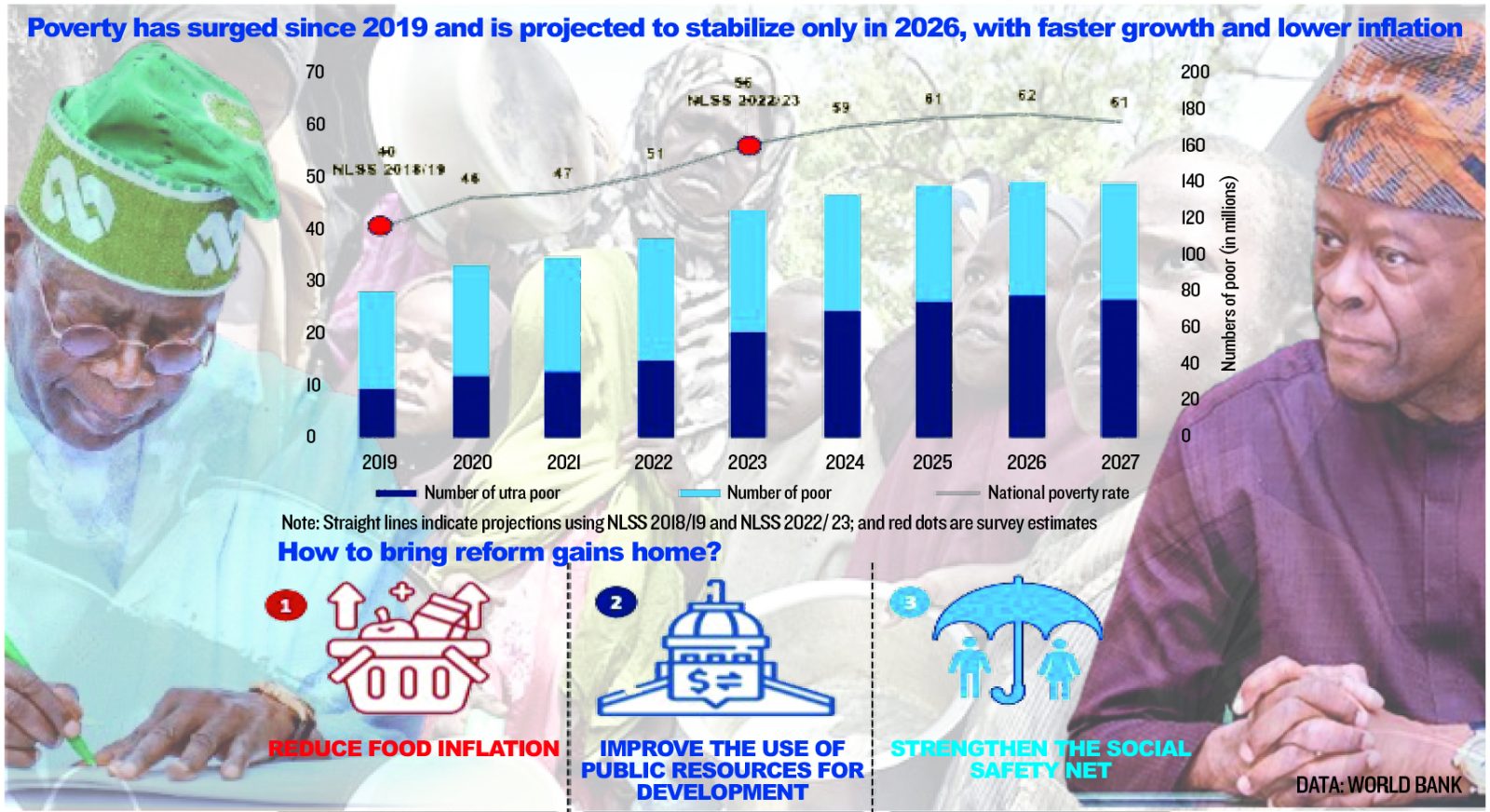
According to the report, the number of Nigerians living in poverty has risen from 81 million in 2019 to 139 million in 2025, with projections indicating it could reach 141 million next year. Extreme poverty, it added, has nearly doubled from 14 per cent in 2019 to 27 per cent in 2023.
The Bank attributed the worsening situation to high food inflation, weak social protection coverage, and structural inequalities that continue to hinder inclusive growth. It estimated that Nigeria’s social protection coverage has dropped to just six per cent of the population, representing only 0.14 per cent of GDP, compared to the global average of 1.5 per cent.
The report linked surging food prices to restrictive trade policies, noting that high import duties and bans on essential food items such as rice, wheat, sugar, and fertilizers have contributed to rising hunger. It urged the Federal Government to remove trade barriers on food and channel more resources into education, health, and social welfare.
Between 2019 and 2024, the cost of key food items most consumed by low-income Nigerians including rice, yam, beans, bread, beef, maize flour, and cooking oil , rose by 406 per cent, far exceeding overall inflation rates.
The Bank also noted a historic fiscal shift in Nigeria’s revenue structure, revealing that state governments received more funds than the Federal Government from the Federation Account for the first time in 2024. States reportedly received ₦5.3 trillion, compared to the Federal Government’s ₦5 trillion, leaving Abuja with limited resources for national infrastructure projects.
While acknowledging the government’s progress in stabilising the economy, the World Bank warned that growth remains too weak to create enough quality jobs or improve living standards. It projected inflation to gradually ease from 23.8 per cent in 2025 to 15.8 per cent in 2027, but cautioned that food prices will continue to pressure households.
Minister of Finance and Coordinating Minister of the Economy, Wale Edun, responded to the report during the Nigerian Economic Summit (NES31), insisting that the administration’s Renewed Hope Agenda is designed to lift millions of Nigerians out of poverty.
“At the end of the day, the reforms must translate into better living standards,” Edun said. “They are aimed at reducing poverty and ensuring sustainable growth.”
The World Bank, however, stressed that for Nigeria to convert its current stability into shared prosperity, both federal and state governments must prioritise human capital development.
“Without coordinated and transparent fiscal management, Nigeria risks missing the opportunity to turn stabilisation into shared prosperity,” the report warned.

Business
 News MasterUpdated 12 months Ago2 Mins read
World Bank Says Nigeria’s Reforms Stabilised Economy but Deepened Poverty
News MasterUpdated 12 months Ago2 Mins read
Share






Related Articles

Business
Hon. Amobi Ogah Engages Global Stakeholders at OTC Texas As Nigeria’s Energy Future Comes in Focus
U.S., Texas — Nigeria’s push for innovation and global collaboration in the...

Business
Fear of Oil Glut as NNPCL Raises Crude Prices Across Grades
Concerns are growing over a possible global oil glut as the Nigerian...

Business
Aliko Dangote’s Wealth Climbs to $34bn After $216m Single-Day Surge
Africa’s richest man, Aliko Dangote, has seen his net worth rise to...

Business
Nigeria’s Petrol Price Drops 15.6% Year-on-Year – NBS
The average retail price of petrol in Nigeria declined by 15.6 per...




Leave a comment