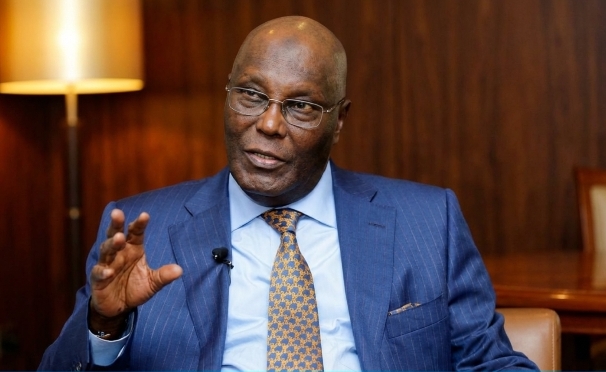
Former Vice President Atiku Abubakar has called on Nigerians to vote out the ruling All Progressives Congress (APC) and President Bola Tinubu in the 2027 general elections, warning that retaining the current administration could worsen the country’s situation.
Speaking during an interview on Arise TV, Atiku expressed concern about Nigeria’s direction, stating that he does not see a promising future if the APC remains in power. He also revealed that his anticipated bid for the presidency in 2027 may be his final attempt, citing the high stakes and the need to leverage his experience.
Atiku, a serial presidential contender, argued that his blend of experience and historical insight makes him well-suited to lead Nigeria at a critical time. He stressed the importance of mentorship in governance, noting that younger political leaders often require guidance to navigate the complexities of leadership.
Reflecting on past administrations, he highlighted his experience serving under former President Olusegun Obasanjo, emphasising that effective governance comes from hands-on involvement at the highest level. While acknowledging former President Goodluck Jonathan as a “decent man,” Atiku suggested that inexperience contributed to challenges during Jonathan’s tenure.
Addressing criticism that he represents the old political order, Atiku maintained that governance failures in some states led by younger leaders underscore the need for experienced leadership at the national level. He described Nigeria’s challenges as both systemic and individual, insisting that capable leadership is essential for stability.
On his current political strategy, Atiku confirmed his role in forming a broad opposition coalition involving members from different parties. He said the alliance is aimed at strengthening democratic competition and improving the chances of unseating the APC in 2027.
He criticised President Tinubu’s administration, particularly its economic policies, describing its performance as disappointing. According to him, the coalition is focused on restoring strong democratic institutions, ensuring separation of powers, and upholding constitutional governance.
Despite concerns over potential rivalries within the coalition, Atiku expressed confidence that members would reach a consensus on a presidential candidate. He also pledged to support whoever emerges, even if it is not him.
Speaking on power rotation, he dismissed arguments that the South should complete eight years, insisting that the North has already spent a longer period out of power.
Atiku further claimed that any strong opposition candidate could defeat Tinubu in 2027. If elected, he said his top priority would be improving security, attributing current challenges to inadequate funding, training, and equipment for security personnel.
Responding to corruption allegations, Atiku described them as politically motivated. He recalled that a probe initiated during the Obasanjo administration found no evidence against him, even after he waived his immunity to cooperate with investigators. He also reaffirmed his longstanding position on restructuring.
APC Pushes Back
Meanwhile, the APC leadership has rejected opposition criticisms, defending its internal processes and governance record.
National Chairman Nentawe Yilwatda and National Secretary Ajibola Basiru said the party remains committed to internal democracy and cannot be blamed for crises within opposition parties.
During a media briefing, they criticised what they described as instability among opposition politicians, noting that frequent defections and internal disputes reflect weak ideological commitment.
Yilwatda stressed that the APC is focused on governance and strengthening its internal structures rather than interfering in rival parties. He added that political organisations must take responsibility for their cohesion and discipline.
Basiru, on his part, described consensus-building as a key feature of the APC’s decision-making process, calling it a strong form of democratic participation. He explained that major decisions are reached through consultations involving the party’s National Executive Committee and other stakeholders.
The APC leadership also reaffirmed its commitment to regular elections, internal reviews, and party conventions as tools for maintaining relevance and competitiveness.
While acknowledging ongoing socio-economic challenges, they pointed to government efforts to expand social protection programmes and improve access to healthcare and education.
The party urged opposition groups to address their internal issues instead of blaming external forces, reiterating its position as a dominant political force ahead of the 2027 elections.

Politics
 News MasterUpdated 6 months Ago3 Mins read
2027: Atiku Mobilises Opposition as APC Defends Internal Democracy
News MasterUpdated 6 months Ago3 Mins read
Share



Related Articles

Politics
ORU WEST DESERVES BETTER, NO COMMUNITY WILL BE LEFT BEHIND — DCN OBIOMA OKORIE
Hon. Deacon Obioma Okorie, aspirant for Oru West State Constituency for the...
Politics
Abia’s Future in Focus: Mascot Uzor Kalu Emerges Voice of Reason Amid Abia APC Political Tension
“In the end, peace is not merely the absence of conflict, but...
Politics
Abia’s Future in Focus: Mascot Uzor Kalu Emerges Voice of Reason Amid Abia APC Political Tension
“In the end, peace is not merely the absence of conflict, but...
Politics
ADC Faces Crucial Test as Supreme Court Ruling Looms Over 2027 Ambitions
The African Democratic Congress (ADC) is at a defining crossroads as the...




Leave a comment