The Abia State Government has announced plans to overhaul the official recognition of autonomous communities as part of efforts to curb recurring conflicts and restore stability at the grassroots level.
The initiative, which involves a fresh gazetting process, is aimed at correcting longstanding irregularities in how communities are structured and officially documented across the state. Authorities say the move has become necessary due to widespread inconsistencies that have fueled disputes among local populations.
According to the Commissioner for Local Government and Chieftaincy Affairs, the current framework has created confusion in several areas. In some cases, single villages have been split into multiple autonomous communities, while in others, families and kindreds have been placed under different traditional authorities, leading to tension and rivalry.
The government noted that such anomalies have contributed significantly to communal clashes, with numerous petitions reportedly submitted on a regular basis over leadership and boundary disagreements.
Officials also revealed that the last comprehensive gazetting exercise was carried out more than a decade ago, despite the process ideally being reviewed periodically. The delay, they said, has worsened governance challenges at the community level.
As part of broader reforms, the state plans to introduce a more structured system for town unions and community leadership, including proper documentation and clearer role definitions. This is expected to reduce overlapping authority and promote cooperation between traditional rulers and community development leaders.
In addition, conflict resolution mechanisms are being strengthened, with mediation centres already established across local government areas to address disputes before they escalate.
The government maintains that the exercise is not intended to impose leadership on any community but to ensure transparency, order, and long-term peace across Abia’s rural and urban settlements.

State News
 News MasterUpdated 4 days Ago1 Mins read
Abia Plans Fresh Community Recognition Exercise to End Leadership Disputes
News MasterUpdated 4 days Ago1 Mins read

Share






Related Articles

State News
Audit Row Sparks Fresh Uncertainty in Akwa Ibom’s Electricity Sector
Tensions are rising in Akwa Ibom’s power industry as disagreements over a...

State News
Lagos Equips Retirees With Agricultural and Biogas Skills for Post-Service Livelihood
The Lagos State Government has launched a capacity-building programme aimed at helping...
State News
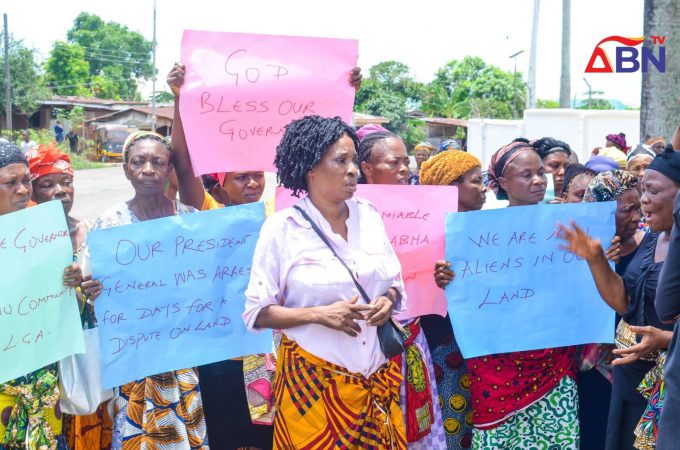
Abia Women Demand Government Action Over Detentions, Deepening Community Land Dispute
A group of women from the Amanato Eziama Nneato community in Umunneochi...

State News
Gov. Otti Signals Strong Partnership with Estate Surveyors
Abia State Governor, Dr. Alex Otti, OFR, has reaffirmed his administration’s readiness...




Leave a comment