The Federal Government has confirmed that diplomatic discussions are ongoing with the United States to ease tensions following President Donald Trump’s threat of possible military action against Nigeria over alleged persecution of Christians.
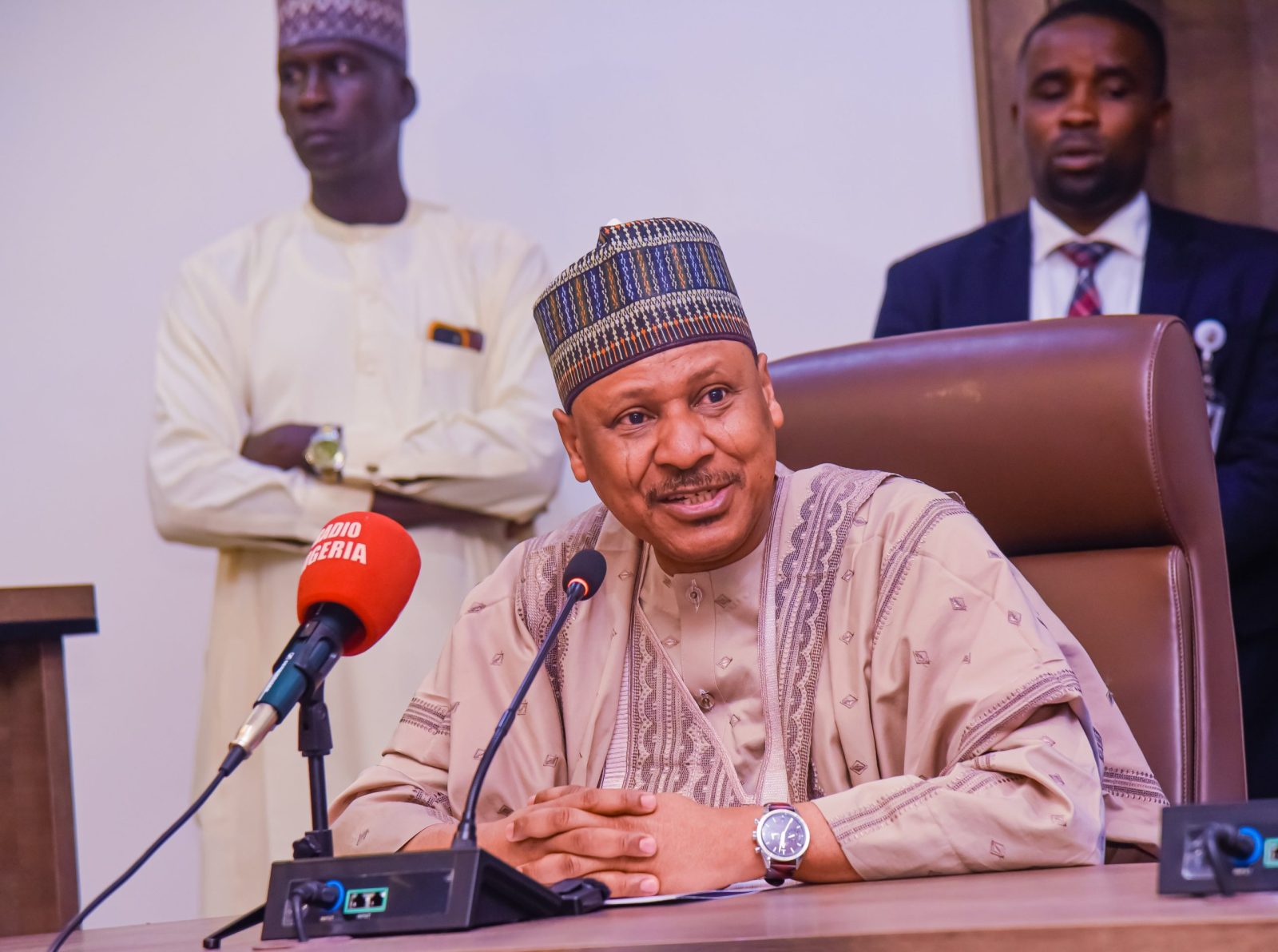
Minister of Information and National Orientation, Mohammed Idris, disclosed this during an interview on Sky News’ The World with Yalda Hakim on Monday night. He said communication channels between Abuja and Washington “have been opened” and that both sides are working to ensure a clearer understanding of Nigeria’s “diversity and complexity.”
> “We are talking to them, and they are beginning to see the situation more clearly,” Idris said. “Much of the information circulating is based on data that cannot withstand proper scrutiny.
Trump had on 31 October accused the Nigerian government of allowing Islamist extremists and Fulani herdsmen to massacre thousands of Christians each year. He subsequently reinstated Nigeria on the Countries of Particular Concern (CPC) list for alleged violations of religious freedom and directed the Pentagon to consider military options while freezing aid pending review.
The U.S. State Department confirmed Nigeria’s CPC designation on 1 November, citing widespread persecution in parts of northern and central Nigeria. The move rekindled global debate over religious and ethnic violence in Africa’s most populous nation, where clashes between Muslim herders and Christian farmers have claimed thousands of lives in the past decade.
However, the Nigerian government maintains that these conflicts are driven by resource competition and criminality, not religion. Idris rejected claims of genocide, stressing that Nigeria remains a secular and multi-faith country under its constitution.
> “Nigeria has guaranteed freedom of religion under its constitution,” he insisted. “Conflicts in the Middle Belt are not religious wars.”
The minister further alleged that certain U.S. lobbyists were being influenced by the Indigenous People of Biafra (IPOB) — a separatist group Nigeria has proscribed as a terrorist organisation.
> “There is a direct connection between some U.S. lobbyists and this proscribed group,” Idris said.
The remarks come amid escalating diplomatic tensions. On 4 November, Presidential Adviser Bayo Onanuga accused U.S. Senator Ted Cruz of spreading misinformation after co-sponsoring a resolution calling for investigations into the alleged killing of Christians. The Presidency claimed that Cruz had ties to IPOB representatives lobbying in Washington.
IPOB, led by detained activist Nnamdi Kanu, welcomed Trump’s declaration and demanded an international probe into alleged state abuses. Since February, its envoys have met with several U.S. lawmakers, including Representatives Craig Goldman and Gus Bilirakis, to draw attention to the alleged marginalisation of Nigeria’s Igbo population.
Despite the diplomatic strain, Idris adopted a conciliatory tone, urging renewed cooperation on counterterrorism.
> “The United States has helped Nigeria fight terrorism in the past. We want that partnership to continue,” he said.
President Bola Tinubu, in a statement issued on 2 November, also emphasised dialogue and diplomacy.
> “The description of Nigeria as intolerant is inaccurate,” Tinubu stated. “We will continue to work with the United States to resolve these concerns through political and diplomatic means.”
The dispute has drawn international reactions. On 5 November, China cautioned Washington against interfering in Nigeria’s internal affairs, while Russia’s ambassador in Abuja warned against “neo-colonial adventurism.” In response to rising tensions, Chad temporarily closed its northern border with Nigeria, citing fears of regional instability.
Religious and communal violence remains a pressing issue within Nigeria. According to the National Human Rights Commission (NHRC), at least 2,000 people were killed in communal clashes and insurgent attacks between January and September 2025.
The Nigerian Air Force continues operations against Islamist groups in the northeast, while local vigilante groups struggle to contain reprisal attacks in the Middle Belt.
Despite recent tensions, the U.S. still views Nigeria as a key counterterrorism partner in the Sahel, providing roughly $500 million annually in military and humanitarian aid. Abuja, for its part, remains committed to preserving this strategic partnership.
> “Nigeria and the U.S. have achieved great results together,” Idris concluded. “We intend to keep it that way.”

National
 News MasterUpdated 11 months Ago3 Mins read
FG in Talks with Washington over Trump’s Military Threat – Idris
News MasterUpdated 11 months Ago3 Mins read
Share
Related Articles
National
Nigeria Moves Against South Africa Over Killing of Citizens, Demands Accountability
The Federal Government has intensified diplomatic pressure on South Africa following the...
National
Reps Approve Bill for New Federal Medical Centre in Ikwuano, Awaits Senate Approval
The House of Representatives has passed a bill sponsored by Hon. Obi...
National
FG Targets Malnutrition with New 10-Year Nutrition Policy
The Federal Government has taken a major step toward tackling malnutrition following...
National
Kalu’s Lawyers Reject Petition Seeking Revocation of Law School Certificate
Legal representatives of the Deputy Speaker of the House of Representatives, Benjamin...


Leave a comment